Ueno Park Things to Do: Is the Ueno Zoo Panda Still There?
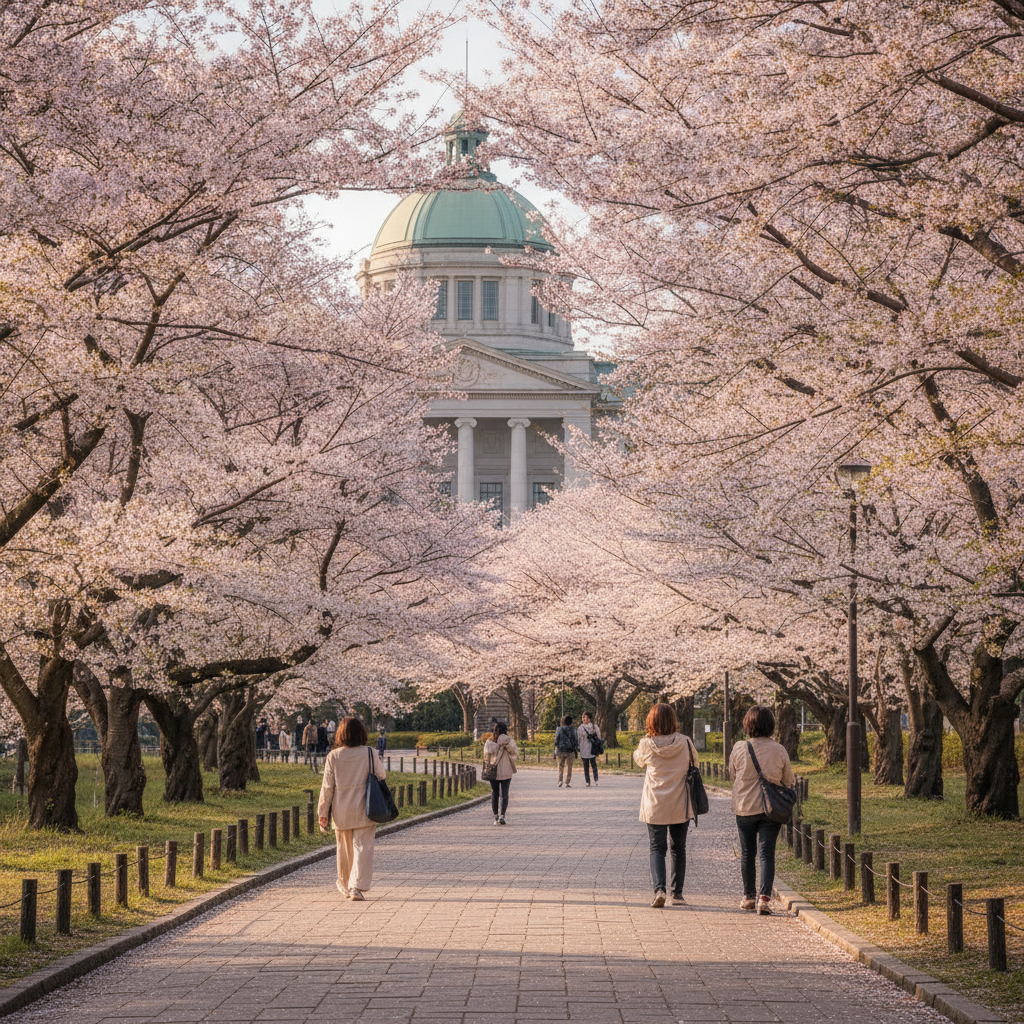
Let's answer the question people are searching for first: no, there are no giant pandas at Ueno Zoo anymore. The pair born there were returned to China in January 2026, following their parents in an earlier return. If you were coming to Ueno purely for pandas, adjust. If you were coming to Ueno for a half day of museums, a park with a lake, and Tokyo's most chaotic street market, nothing has changed. Here's how to spend it.
Tokyo National Museum: go straight to the Honkan
Ueno Park has more museums than you can visit in a day. If you pick one, pick the Tokyo National Museum at the north end. It's closed Mondays.
The trick is not to try to see everything. Go to the Honkan, the main building with the tiled roof facing the fountain, take the central staircase to the second floor, and walk the highlights route clockwise. It's a single lap through samurai armour, swords, Noh costumes, ukiyo-e prints and Buddhist sculpture, arranged chronologically. Ninety minutes is enough.
Stop in the sword room. The blades are lit from below in dark cases, and if you crouch to eye level you can see the hamon, the wavy temper line where the hard edge steel meets the softer spine, running the length of each blade like a coastline. It's the reason people spend years learning to look at swords, and you can see it in thirty seconds.
If it's a weekend, the Gallery of Horyuji Treasures, a separate building to the left of the Honkan, is nearly empty and holds 7th-century bronze Buddhas in a dark, hushed room. Ten minutes there is worth it.
Ueno Zoo without pandas
Is it still worth a visit? For families, yes — it's Japan's oldest zoo, it's inside the park, and it has a gorilla and tiger area, a polar bear pool, and a Japanese wildlife section with tanuki, Japanese macaques and giant salamanders you won't see elsewhere. For adults without kids and with limited time, it's skippable. It's closed Mondays like the museum.
Shinobazu Pond and the temple on the island
Walk south through the park to Shinobazu Pond. In July and August the entire western pond is covered wall-to-wall with lotus leaves the size of dinner plates, and the flowers open in the early morning; by 10am they've closed again. Bentendo, the hexagonal temple on the causeway island, is lively year-round with incense, fortune slips and pigeons. The pedal boats on the eastern pond are genuinely pleasant on a warm day.
Ameyoko: the market under the tracks
Cross the road at the pond's southeast corner and you're at Ameya-Yokocho, the market that runs under and alongside the Yamanote line tracks from Ueno to Okachimachi. It started as a post-war black market and never quite lost the feel.
This is where the sensory overload lives. Fishmongers shout prices for tuna and salmon roe over the ice, a train grinds overhead every couple of minutes, and the smell shifts every ten metres: dried squid, grilled kebab from a Turkish stall, sweet chestnuts, then fish again. The candy shops sell by the scoop. Go after 3pm when the fish stalls start discounting and before 6pm when some close. Weekends are packed but that's the point.
For a sit-down, the kaisendon (raw fish on rice) places under the tracks are honest, fast lunches. Cash is safest here.
Timing the half day
The order that works: museum at 9:30 or 10am when it opens, zoo if you're doing it, pond, Ameyoko by mid-afternoon. Ueno Station is at both ends of the walk. The pieces are all within 15 minutes of each other; the confusion comes from the park's many exits and the museum's multi-building layout.
Our Ueno Museum & Ameyoko Half-Day Pamphlet lays out the route with walking directions between each stop, which museum entrance to use, what to look for in the Honkan, and where the best stalls in Ameyoko are. It's $20 and lives on your phone.
Ueno Museum & Ameyoko Half-Day Pamphlet
The Tokyo National Museum's highlights route, Shinobazu Pond, and Ameyoko market, with walking directions between each stop.
See the full pamphlet