Shimokitazawa Vintage Shopping Guide: Tokyo's Indie Neighborhood, Explained
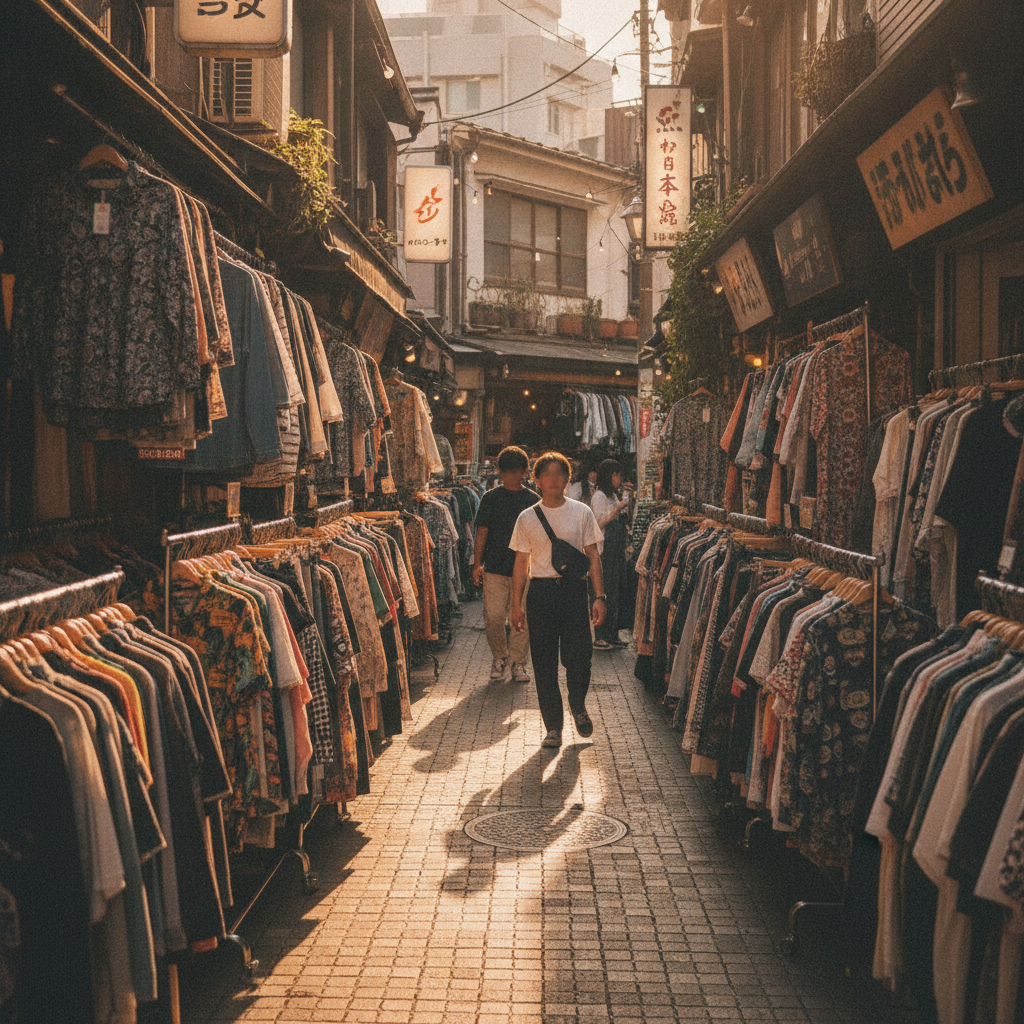
Shimokitazawa, "Shimokita" to everyone who lives here, is a 10-minute train ride from Shinjuku or Shibuya and feels like a different city. No towers, few chains. Narrow lanes, low buildings, well over a hundred second-hand clothing shops, a dozen small theaters, and a coffee scene that takes itself seriously. It's the neighborhood Tokyoites recommend when you ask where they go.
The problem with visiting is that there's no obvious centre and the shops are scattered across both sides of the station. Here's how to make sense of it.
How Shimokitazawa vintage actually works
Three things worth knowing before you start.
It's curated, not thrift. Most shops here buy from the US and Europe by the bale, sort ruthlessly, and hang only what fits their aesthetic. You're paying for that editing. There are also flat-price shops where everything is a single low price, great for rummaging.
Sizes run small. Shops buy for the Japanese market; if you're above a US Large, the selection thins. Men's shirts and outerwear are the strongest categories.
Hours are late. Most shops open at 11am or noon and close around 8pm. Going at 10am gets you nothing but closed shutters.
A shopping route by area
South exit side is the densest cluster. Start on the lane leading south from the station. Several long-running American vintage chains have branches here, one especially spacious; another shop keeps bales of used kimono at the back priced by weight, and a lightweight haori jacket is one of the best souvenirs in Tokyo. One shop is set inside a converted public bathhouse, and you can still see the tiled walls.
North exit side is slightly calmer, with shops leaning toward older, more precious pieces, from 1930s to 60s dresses to military surplus. Wander the lanes toward Ichibangai shopping street.
Inside the shops it's quiet compared to the street. What you hear is the metal-on-metal scrape of hangers on the rail as you flip through, a record playing somewhere behind the counter, and a shopkeeper steaming a jacket in the corner, the hiss and the faint smell of hot wool. Staff will usually leave you alone unless you ask. Fitting rooms are tiny; wear something easy to change out of.
The theater street
Shimokitazawa's other identity is as one of Tokyo's small-theater capitals. Honda Gekijo, opened in 1982, is the anchor, a mid-sized house that launched generations of Japanese playwrights, and its parent group now runs several venues in the neighborhood, some seating fewer than 100. Performances are in Japanese, so watching one is only for the adventurous, but walking the theater lanes is worth doing: hand-lettered posters layered ten deep on the walls, actors smoking outside the stage door, queues forming before a curtain.
BONUS TRACK: the neighborhood on the old railway line
When the Odakyu line was moved underground, it left a strip of former track through the neighborhood. Instead of selling it to developers, the railway built a series of low-rise "villages" along it. BONUS TRACK, a five-minute walk southwest of the station, is the best of them: a cluster of two-storey wooden shophouses around a shared garden, housing a bookshop that sells used and new, a shop devoted entirely to fermented foods, a natural wine bar, and a cafe where you can sit outside. On weekends there are markets. It's the kind of thing that only happens when a landowner decides not to maximise rent, and it's the part of Shimokita that visitors most often say they wish they'd found earlier.
Coffee, and how to time it
Shimokita takes coffee seriously, with several well-known small-batch roasters within ten minutes of the station. Come around 11:30, shop until 2, eat a curry (the neighborhood's other obsession, with dozens of curry shops), do the theater lanes and BONUS TRACK as the light goes soft, and be back at the station by 6.
Not getting lost
The honest difficulty with Shimokita is that its charm is its labyrinth: lanes fork, the station has exits on multiple levels, and maps show shop names in Japanese half the time. That's fine for a local. For a visitor with three hours, it costs you time in the wrong direction.
Our Shimokitazawa Vintage & Theater Half-Day Pamphlet is a walkable route with directions between each stop: which exit, which lane, which shops in which order, and how to get from the theater district to BONUS TRACK without doubling back. It's $20 and works offline.
Shimokitazawa Vintage & Theater Half-Day Pamphlet
A walkable route through the vintage shop lanes, the theater district and BONUS TRACK, with directions between each stop.
See the full pamphlet