Shibuya Crossing Best View Spots + Harajuku in One Afternoon
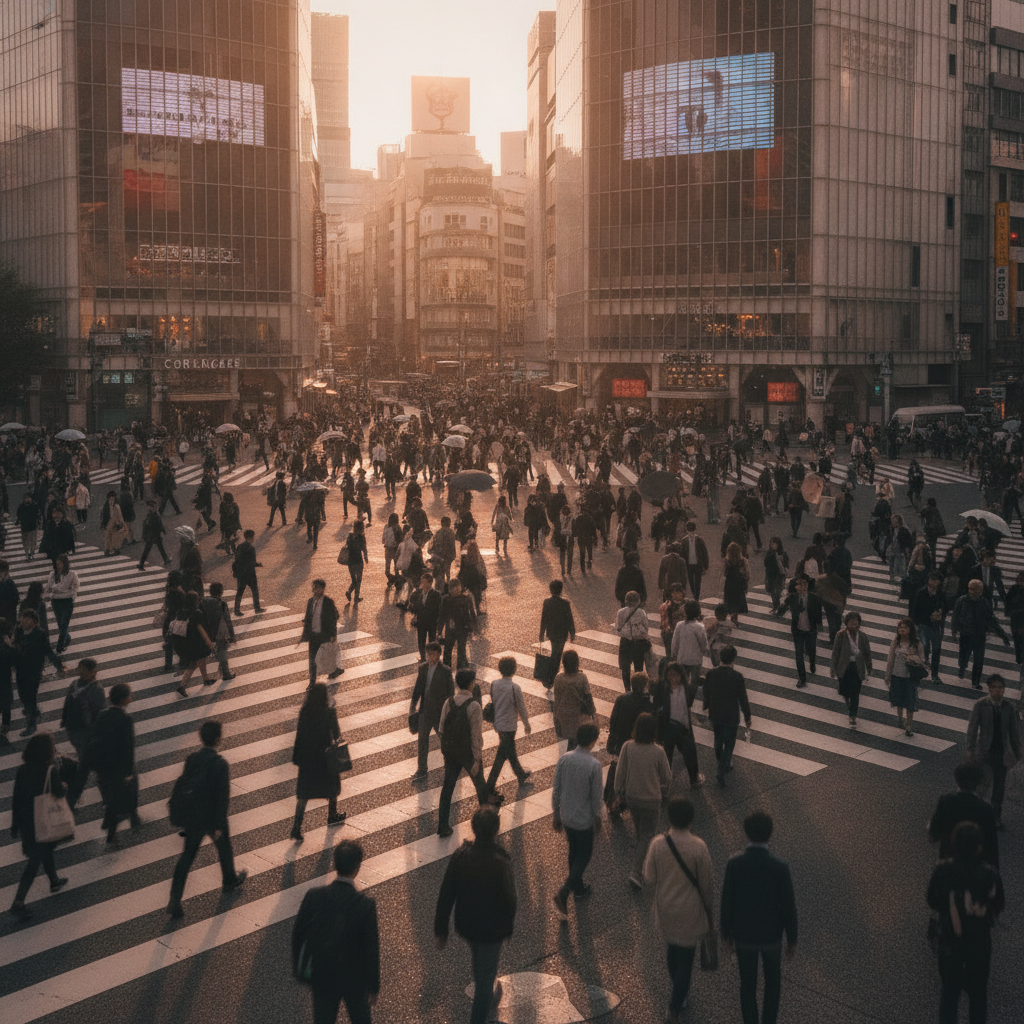
Most people's first Shibuya Crossing experience is the same: you come out of Hachiko Exit, the light changes, you walk across with two thousand strangers, and then you think, "Wait, where do I go to *see* it?" That question, plus "what do I actually do in Harajuku besides take photos," is what this guide answers. The good news is that Shibuya and Harajuku are a single 20-minute walk apart, so you can do both properly in one afternoon.
Where to see Shibuya Crossing from above
There are three realistic options, from free to expensive.
Shibuya Station walkway (free). The elevated pedestrian corridor connecting the JR station to Shibuya Mark City has windows facing straight down onto the crossing. It's not glamorous, and you'll share it with commuters, but it's the classic view and costs nothing.
Mag's Park rooftop at MAGNET by SHIBUYA109 (small fee). The rooftop of the MAGNET building on the north corner of the crossing has a "Crossing View" deck that looks almost straight down. It's the best angle for the actual crossing shape. Check current pricing and hours before you go, since these details change.
Shibuya Sky (paid, book ahead). The open-air rooftop of Shibuya Scramble Square, 229 metres up. From here the crossing itself is tiny; what you're paying for is the whole city, Tokyo Tower and, on a clear winter day, Mt Fuji. Tickets sell out for sunset weeks in advance. If you can only get a daytime slot, take it.
One timing note: the crossing is at its most impressive around 5 to 7pm on weekdays and mid-afternoon on weekends. At 10am on a Tuesday it's just a crossing.
Takeshita Street: the crepe is the point
Walk north along Meiji-dori (or take one stop on the Yamanote line) to Harajuku. Takeshita Street starts directly across from the station's new glass-and-timber building.
It's a 400-metre pedestrian lane that's been the teenage fashion capital of Japan since the 1980s. Yes, it's crowded. Go anyway, but go with a purpose: the crepe stands. Marion Crepes and its neighbours have been here for decades, and watching the counter is half of it — the ladle of batter hits the round hot plate with a hiss, the wooden spreader goes around once in a smooth arc, and forty seconds later the paper-thin sheet is lifted, folded around whipped cream and strawberries, and rolled into a paper cone. The whole street smells of that toasted butter-sugar batter.
If Takeshita Street's crush gets too much, duck south one block toward Cat Street, where the vintage shops and small cafes are calmer.
Meiji Jingu: the reset button
From the far end of Takeshita Street, walk back toward the station and cross into Meiji Jingu, the shrine dedicated to Emperor Meiji, set inside a 70-hectare forest planted a century ago from donated trees.
The change is physical. Within two minutes of passing under the 12-metre cypress torii, the traffic noise on Omotesando drops away and is replaced by the crunch of gravel under your shoes and crows calling in the canopy. The approach takes about ten minutes. On the way, look for the wall of decorated sake barrels on the left, offerings from brewers nationwide, and the wine barrels opposite, a gift from Burgundy.
Entry to the shrine grounds is free; the Inner Garden with its iris field costs a small fee and is worth it in June.
Omotesando: architecture without trying
Exit Meiji Jingu and walk down Omotesando, the zelkova-lined boulevard that Tokyo calls its Champs-Elysees. Prada's diamond-quilted glass tower, Tod's building with its tree-branch concrete facade, and Tokyu Plaza's mirrored kaleidoscope entrance are all within ten minutes of each other. Omotesando Hills, designed by Tadao Ando, is the place for a coffee and a sit-down. From here, Omotesando Station gets you anywhere.
Doing the walk with directions in your pocket
The order above, crossing first, then Takeshita, shrine, Omotesando, works because it moves from loudest to quietest and ends where the transport is easy. What trips people up is the connecting bits: which exit at Shibuya, where the station walkway actually is, how to cut from Takeshita Street to the shrine without backtracking.
Our Shibuya & Harajuku Subculture Half-Day Pamphlet lays that route out stop by stop, with walking directions between each point, where the quieter side streets are, and what to order at the crepe counter. It's $20 and it lives on your phone, so you can put it away and just walk. No guide, no group, your own pace.
Shibuya & Harajuku Subculture Half-Day Pamphlet
The crossing, Takeshita Street, Meiji Jingu and Omotesando, with walking directions between each stop and where to slip out of the crowds.
See the full pamphlet