Tokyo Anime Pilgrimage
A single day of seichi junrei, anime location pilgrimage, that never leaves Tokyo. The staircase at Suga Shrine in Yotsuya is the one from Your Name. Shinjuku Gyoen is the real setting of Makoto Shinkai's The Garden of Words. The wider Yotsuya and Sendagaya area appears in the establishing shots of 5 Centimeters per Second. The final stop, Asakusa, is different in kind: we walk it as the atmospheric source for Demon Slayer's Taisho-era Tokyo, not as a shot-matched location, and we say so plainly. Suga Shrine has stood since 1634, three centuries before the film, and is still an active place of worship. No reservations anywhere; only Shinjuku Gyoen charges a small admission.
Schedule for the day
Overview map showing how the stops relate to each other (straight lines only). For real walking directions, use the "directions" button on each step.
Meet at Yotsuya Station
Suga Shrine is about a 10-minute walk from here through a neighbourhood of slopes and low-rise houses. You're already inside the backgrounds of 5 Centimeters per Second before you reach the first stop.
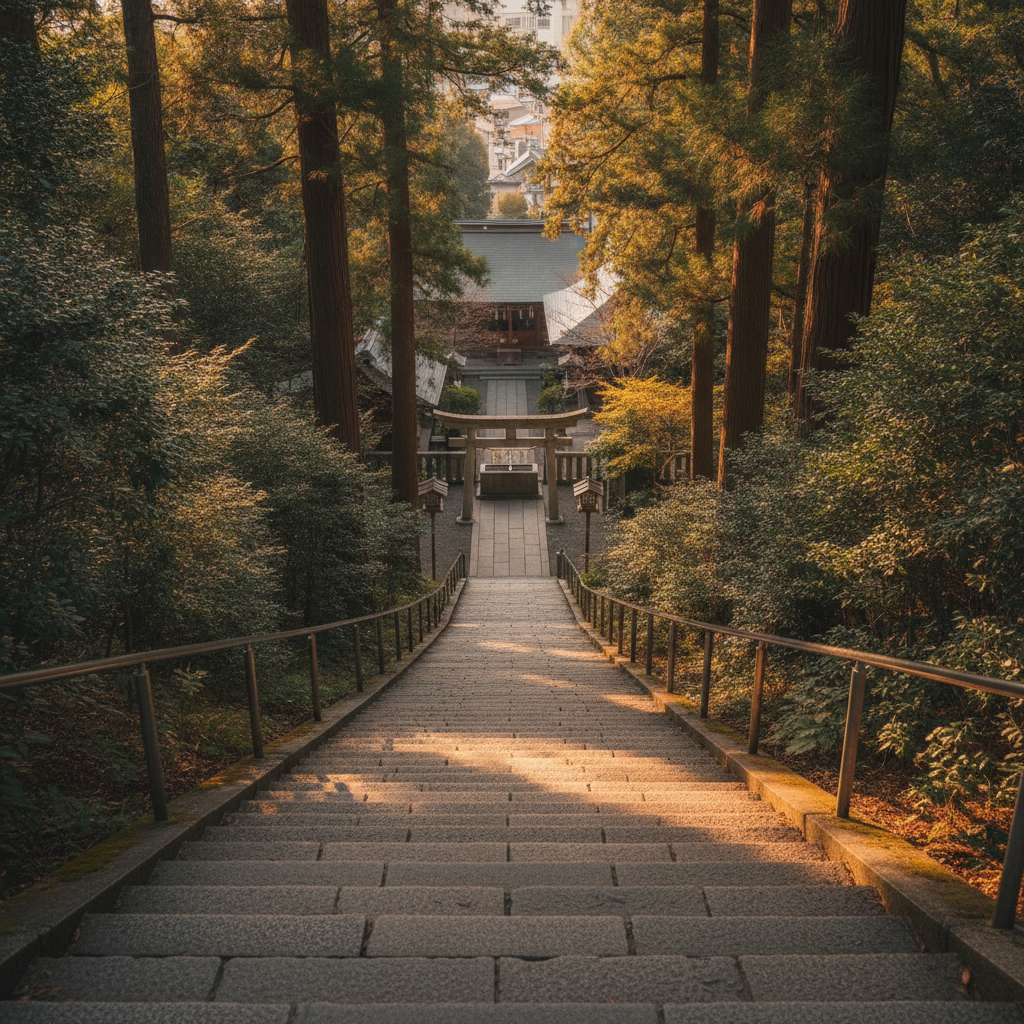
Suga Shrine stairs (Yotsuya, Shinjuku ward)
These are the stairs from Your Name. Look down from the top and the framing matches the film, but the shrine itself has been here since 1634 and is still in use. The unspoken rule is to take your photo from the edge of the steps and leave the path clear for people coming to pray.
Walk Yotsuya toward Sendagaya
This area supplies the establishing shots in 5 Centimeters per Second. There's no single pinpoint; the material is the stations, crossings and hilly streets themselves. Head toward Shinjuku Gyoen and give yourself permission to stop on the way.
Shinjuku Gyoen (The Garden of Words)
The real setting for Shinkai's The Garden of Words, and one of the best-known pilgrimage sites in the city. There's a small garden admission fee. Fans come looking for the pavilion from the rainy scenes, but it's worth an hour as a garden regardless of the weather. Lunch near the garden.
Train to Asakusa
Ride from the Gyoen area across to Asakusa. On arrival, go through Kaminarimon and up Nakamise-dori to Sensoji.
Asakusa: Kaminarimon, Nakamise, Sensoji (Demon Slayer's era, not its shots)
To be honest about it, nothing here matches a specific Demon Slayer scene. Asakusa is where Taisho-era Tokyo, the period the series is set in, still shows through: the red lanterns, the crush on Nakamise. Walk it as atmosphere for the story, and it holds up.
Police: 110 · Ambulance/Fire: 119 · English-language help: JNTO Japan Visitor Hotline, 050-3816-2787 (24/7, multilingual). Don't hesitate to call if you need help.
Tipping isn't customary in Japan — no need to add extra at checkout. Cashless payment is widely accepted, though smaller shops, shrines, and temples are sometimes cash-only. Tax-free shopping (with your passport) is available at participating stores.
Frequently asked questions
Was Suga Shrine built for the anime?
No. Suga Shrine dates to 1634, in the Edo period, and is still an active shrine; the Your Name connection is a very recent chapter in its history. It's about a 10-minute walk from Yotsuya Station. Please be considerate of people there to worship.
Is Asakusa an actual Demon Slayer filming location?
Not in the shot-for-shot sense. We include Kaminarimon, Nakamise-dori and Sensoji because they preserve the atmosphere of Taisho-era Tokyo, the setting of Demon Slayer. The pamphlet is explicit that this is historical-atmosphere inspiration, not a pinpointed scene.
What payment methods do you accept, and can I get a refund?
We accept credit card payments via Square. Because this is digital content, purchases generally aren't refundable, but if a duplicate charge or technical fault prevents you from accessing it, contact support@wayfinderjp.com within 7 days of purchase for a full refund.