Yanaka, Tokyo's Old Town: A Walk Through Yanesen and Kappabashi
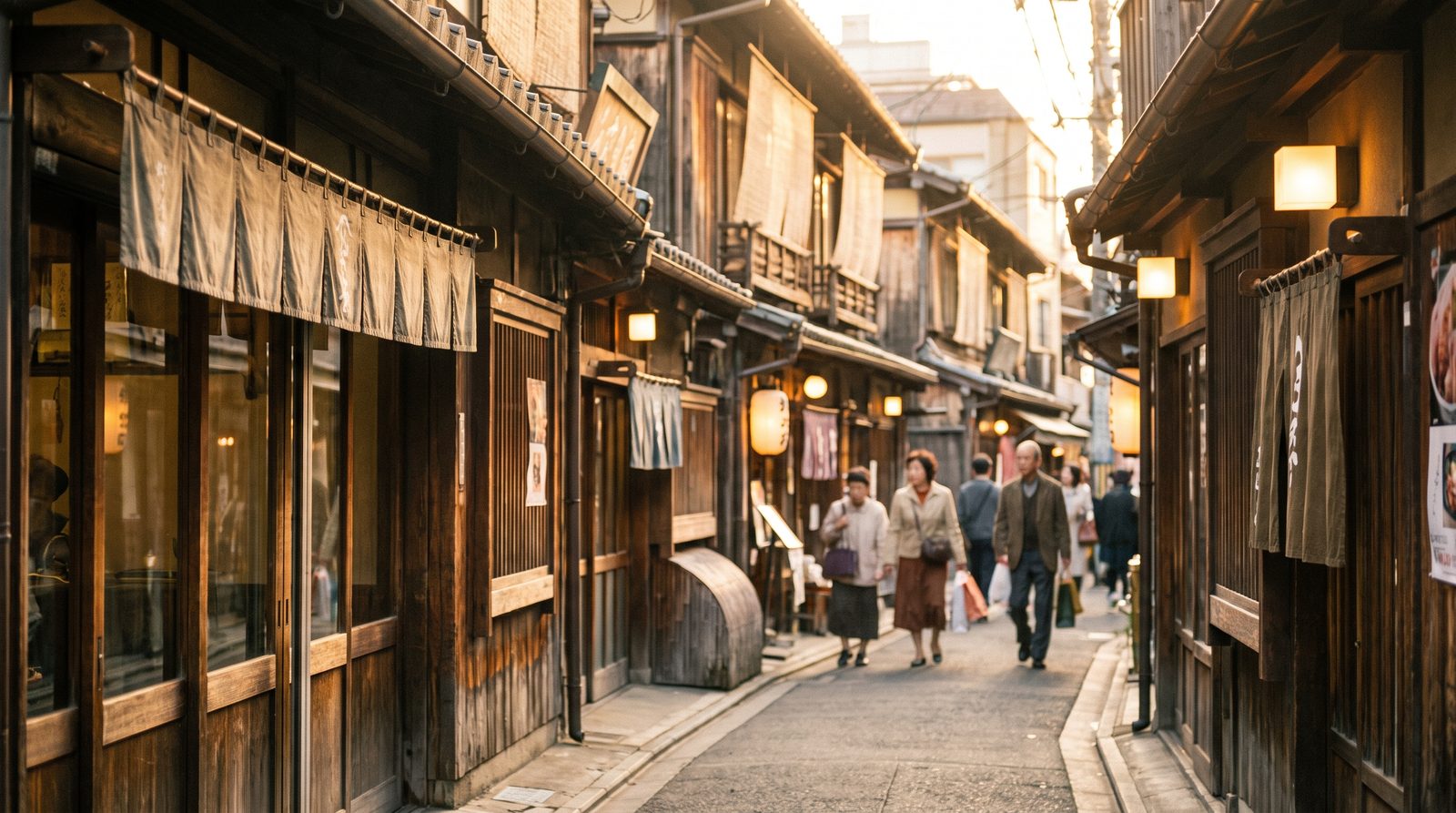
Yanaka, Nezu, and Sendagi (locals compress them into "Yanesen") sit on the low hills north of Ueno Park. The area escaped both the 1923 earthquake fires and the 1945 bombing, which is why it still has wooden houses, family shops, and temples every hundred meters. It's the neighborhood people mean when they ask for Tokyo off the beaten path, and it's easy to reach: 15 minutes by train from Tokyo Station to Nippori.
Yanaka Ginza and the Yuyake Dandan steps
From Nippori Station's west exit, a five-minute walk brings you to the top of Yuyake Dandan, "sunset stairs," a short flight of steps looking down over Yanaka Ginza shopping street. The name is earned: in late afternoon the sun sets directly down the street, and the steps fill with people holding croquettes and waiting for it.
Yanaka Ginza itself is about 170 meters of small shops: a butcher known for menchi-katsu (fried minced pork cutlet, ¥250 or so), a tea seller, a few craft shops, a shop selling cat-shaped everything. It's not a market in the tourist sense. Locals do their shopping here. The right way to walk it is slowly, eating.
Yanaka Cemetery and its cats
Behind the station is Yanaka Cemetery, a large, tree-lined graveyard that doubles as the neighborhood's park. The main avenue is a cherry tunnel in early April; the rest of the year it's simply quiet. The cats are real, and there are many: they sit on grave markers, sleep on warm stone, and are entirely unbothered by you. Feeding them is discouraged, but photographing them is a local pastime.
The cemetery is a good place to hear the neighborhood. Bicycle bells, crows, and every so often a temple bell from one of the dozens of temples that ring the area. It's hard to believe Ueno Station is ten minutes away.
Nezu Shrine and its torii tunnel
Twenty minutes' walk southwest, Nezu Shrine is one of Tokyo's oldest, with buildings from 1706 that survived everything since. The reason to come is the row of small vermilion torii gates that climbs the hillside at the edge of the grounds: a miniature version of Kyoto's Fushimi Inari, low enough that tall visitors have to duck. In late April and May the hillside beside it is covered in azaleas and the shrine holds a festival. The rest of the year you can often have the tunnel to yourself for a minute or two.
Kappabashi: the kitchen street
From Nezu, it's a short subway hop or a 30-minute walk east to Kappabashi Dogu-gai, the 800-meter street where Tokyo's restaurants buy their equipment. Around 170 shops sell knives, ceramics, lacquerware, bamboo steamers, and the plastic food replicas displayed in restaurant windows.
The knife shops are the highlight for most visitors. Ask to hold one. The staff will hand it over, explain the steel, and if you buy it, engrave your name on the blade at the counter with a small hammer and chisel, a few taps per character, a process that takes maybe two minutes and is oddly moving to watch. Prices for a good all-purpose knife start around ¥10,000. Ceramics shops sell restaurant-grade bowls and plates for a fraction of department-store prices, and they'll wrap them for travel.
Kappabashi shops close early (many by 5:00 p.m.) and several close on Sundays. Plan it for a weekday afternoon.
Timing the walk
The ideal order is Nippori in the morning, Yanaka Ginza and the cemetery before lunch, Nezu Shrine early afternoon, Kappabashi by 3:00 p.m., then back to Nippori for the sunset on the steps if you have the energy. Total walking is 5 to 7 km. Yanaka Ginza shops mostly open around 10:00; a few cafes open earlier.
Yanaka-Nezu-Sendagi & Kappabashi Artisan Backstreets
A full-day route through Yanaka Ginza, Yuyake Dandan, the cemetery, Nezu Shrine's torii tunnel, and Kappabashi, with directions from wherever you're starting.
See the full pamphlet