How to Watch Sumo Practice in Tokyo: A Ryogoku Morning Guide
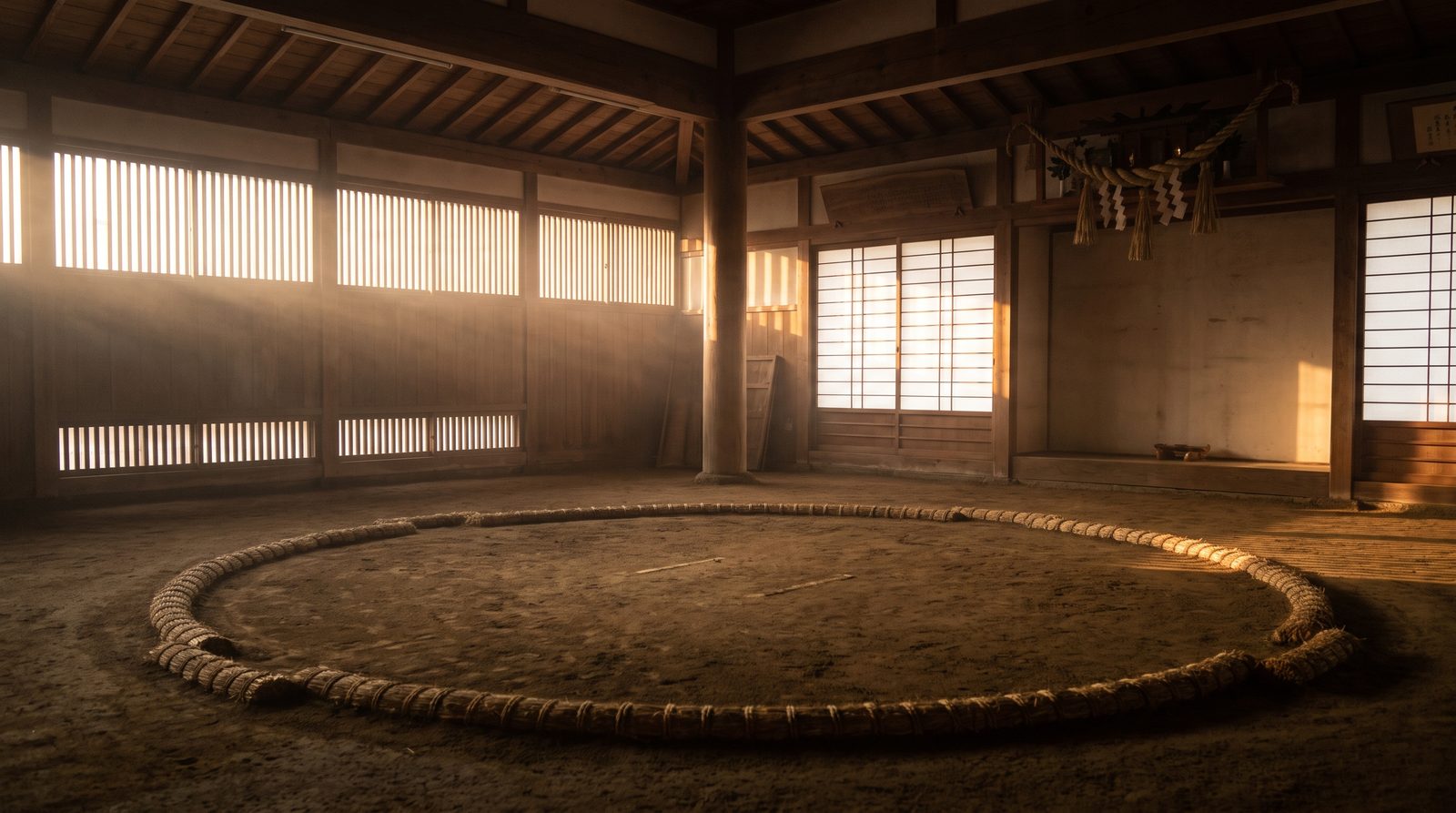
If you're in Tokyo outside the three annual tournament months (January, May, September), a morning in Ryogoku is the closest you'll get to sumo, and in some ways it's better than a tournament. You're a few meters from the wrestlers, in the room where they train. This guide explains how it works, because it's not as simple as showing up.
How sumo morning practice visits work
Sumo wrestlers live and train in stables (heya), and around 40 of them are clustered in and around Ryogoku. Morning practice (asageiko) typically runs from about 7:00 to 10:00 a.m. A few stables allow visitors to watch, and the rules have tightened in recent years:
- Reservations are required at nearly every stable that allows visitors. Walk-ins are usually refused. Some stables take bookings directly (in Japanese), and several tour operators handle reservations for a fee.
- Practice does not happen every day. Stables rest after tournaments and during regional tours. The schedule is not published in English, and a stable can cancel on short notice.
- You may be the only visitors, or one of a dozen. Space is limited; groups are small.
If you can't get a reservation, a few stables have street-facing windows where practice is visible from the sidewalk. It's not the same, but it's something.
What to expect and how to behave
You'll be seated on the floor at the edge of the practice room, usually on a thin cushion. The rules are simple and strictly enforced: sit still, stay quiet, no flash, no eating, no leaving mid-session. Don't stretch your legs toward the ring. Dress modestly.
The practice itself is repetitive and, for that reason, absorbing. Wrestlers take turns in the ring while others do shiko (the leg-raising stomp) in the corners. The room is quiet except for the slap of bare feet on packed clay, the hard clap of bodies meeting at the charge, and the occasional bark of the stablemaster. In cold months you can see the steam coming off their backs. Ninety minutes goes quickly.
The Sumo Museum and Kokugikan
Two minutes from Ryogoku Station is the Kokugikan, the national sumo arena. Inside its ground floor is the Sumo Museum, which is free and open on weekdays. Exhibits rotate; you'll typically see ceremonial aprons, woodblock prints, and portraits of past champions. It's a 20 to 30 minute visit and a good way to fill time between practice and lunch. (During tournaments the museum is only open to ticket holders.)
Walk around the outside of the Kokugikan too. The stone monuments and the handprints of yokozuna are outside the main entrance.
Chanko nabe for lunch
Chanko nabe is the hot pot wrestlers eat to gain weight: a dashi or miso broth with chicken, fish, tofu, and a lot of vegetables. It's not heavy in the way you'd expect; it's mostly protein and greens in broth. Several restaurants in Ryogoku are run by retired wrestlers, and the walls are covered with photos and signed handprints of the owner's old stablemates.
Lunch sets run ¥1,500 to ¥3,000 and most places open at 11:30. Go right at opening; the popular ones fill up by noon.
Other things to do in Ryogoku
- Sumida Hokusai Museum: Ten minutes' walk, dedicated to the woodblock artist. Small and well done.
- Kyu-Yasuda Garden: A free strolling garden next to the Kokugikan, quiet enough that you'll hear the carp surface.
- Ekoin Temple: Historic temple where sumo tournaments were held before the Kokugikan existed.
Putting the morning together
The tricky part of this morning is sequencing. Practice ends around 10:00, the museum opens at 10:00, and the chanko restaurants open at 11:30, so the order matters, and the stable you visit determines where you start walking.
Ryogoku Sumo Morning Walk Pamphlet
A stable-district walk, morning-practice reservation guidance, the free Sumo Museum, and a chanko nabe restaurant run by a former wrestler.
See the full pamphlet