Is Nikko Worth Visiting? A Day Trip from Tokyo
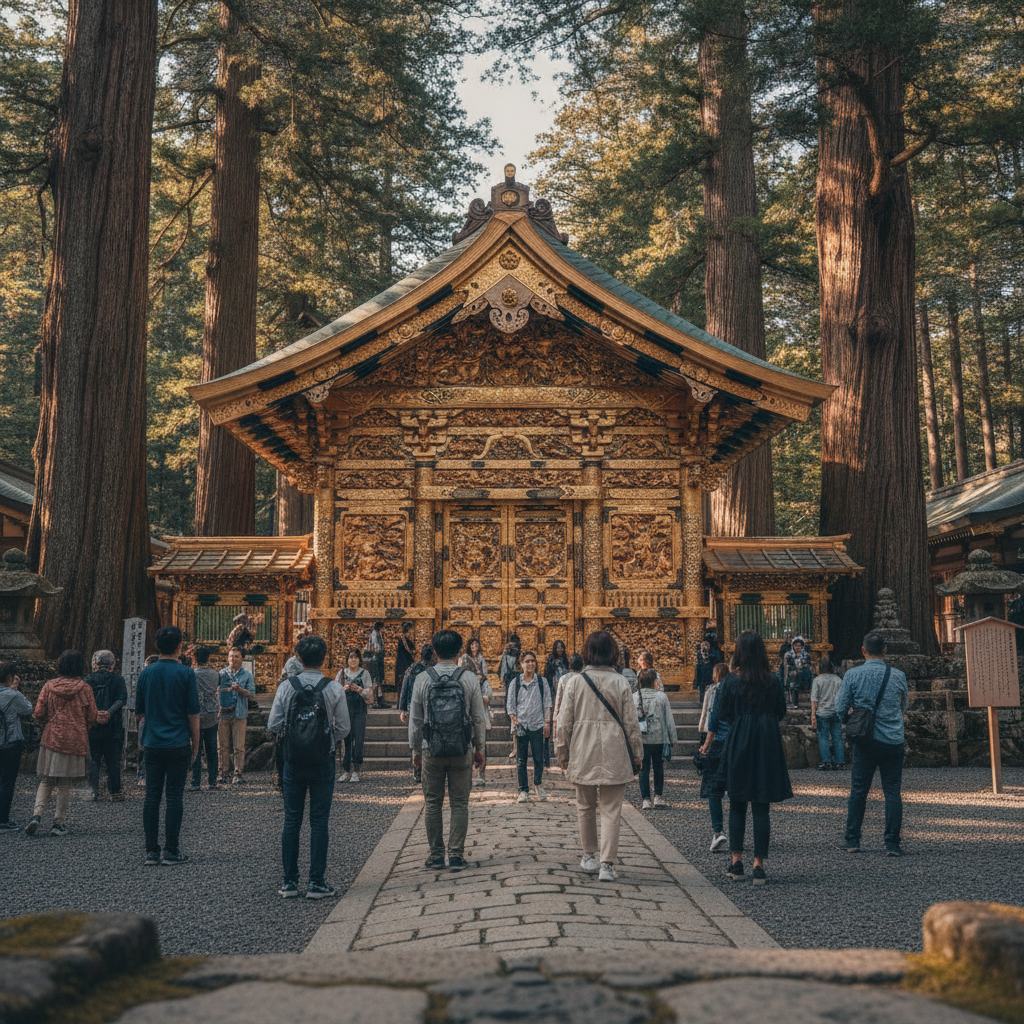
Short answer: yes, and it's one of the few Tokyo day trips where the day is genuinely used up. Two hours each way, a shrine complex unlike anything else in Japan, a mountain road with dozens of hairpin bends, a 97-metre waterfall and a lake at over 1,200 metres. The catch is that it doesn't work as a half-hearted visit. Here's how to make it count.
Getting there: Tobu, not JR
The Tobu Railway from Asakusa is the practical route. The limited express takes about 1 hour 50 minutes to Tobu-Nikko, reserved seats. A Nikko-area rail-and-bus pass covers the round trip on local trains, the bus up to Lake Chuzenji and back, and a few extras; you pay a supplement for the express. It's worth it if you're going up to the falls, which you should.
Leave Asakusa by 7:30. Nikko's shrines close around 5pm (earlier in winter) and the last comfortable train back is around 7pm.
Toshogu: stand under the Yomeimon and don't move
Toshogu is the mausoleum of Tokugawa Ieyasu, the shogun who unified Japan around 1600, built by his grandson decades later with the explicit intention of overwhelming visitors. From the station, a bus, or a walk uphill through town, gets you to the shrine road.
The approach passes the five-storey pagoda and the Sacred Stable with the carved "hear no evil, speak no evil, see no evil" monkeys. Then, up a flight of stone steps, the Yomeimon gate. It's said that you could stare at it until sunset without seeing everything, hence its nickname, "the gate of the setting sun." That is not much of an exaggeration: hundreds of carvings, dragons, sages, children at play, peonies, in white, gold leaf, red lacquer and green. One of the columns has its pattern carved upside down on purpose, because a perfect building invites misfortune.
Stand under it for ten full minutes. The cedar smell from the surrounding trees, the smoke from the incense burner below, the flat clap of visitors' hands at the main hall, it's the closest thing Japan has to a European cathedral experience, and it's built entirely of wood.
Further in, look above the entrance to the inner sanctuary for the small carving of the sleeping cat, then climb the long stone stair to Ieyasu's actual tomb, a plain bronze urn in the forest that makes a startling contrast with everything below.
Weekday mornings are the only quiet time. Weekend afternoons in October and November are the worst.
Irohazaka: the road with 48 bends
From the shrines, the bus to Lake Chuzenji climbs the Irohazaka, a pair of one-way mountain roads with 48 hairpin turns in total, one for each character of the old Japanese syllabary, each bend signposted with its letter. Sit on the left side going up for the valley views. In autumn, this road is one of the most famous foliage views in eastern Japan, and also one of the most famous traffic jams, so allow extra time.
Kegon Falls: take the elevator
At the top, Kegon Falls drops 97 metres in a single sheet from the lake's outflow. You can see it free from the upper platform, but pay for the elevator down through the rock to the base viewing deck. From there the spray hits your face, the roar cancels conversation, and in deep winter parts of it freeze into blue columns. Ten minutes is all you need.
Lake Chuzenji: lunch, then down
The lake sits in a volcanic caldera under Mt Nantai. In the early 20th century it was where foreign embassies kept summer villas; restored embassy villas along the south shore are open to visitors. Lunch is yuba (tofu skin), Nikko's local specialty, or trout from the lake. Then take the bus back down the other Irohazaka to the station.
What makes it work or fail
Nikko fails when people arrive at 11, spend three hours at Toshogu, and discover the bus to the lake takes nearly an hour each way. It works when the shrine is done by noon and the afternoon is the mountain.
Our Nikko Toshogu & Kegon Falls Day-Trip Pamphlet lays the day out with times: which train, which bus stop, what to look at in Toshogu in what order, the elevator, the lake, and the descent. It's $20, offline on your phone, and built around the timetable so you're not doing the maths on the platform.
Nikko Toshogu & Kegon Falls Day-Trip Pamphlet
Toshogu Shrine, the Irohazaka mountain road, Kegon Falls and Lake Chuzenji, with train, bus and walking directions.
See the full pamphlet