Nara Day Trip from Kyoto or Osaka: Are the Deer Safe?
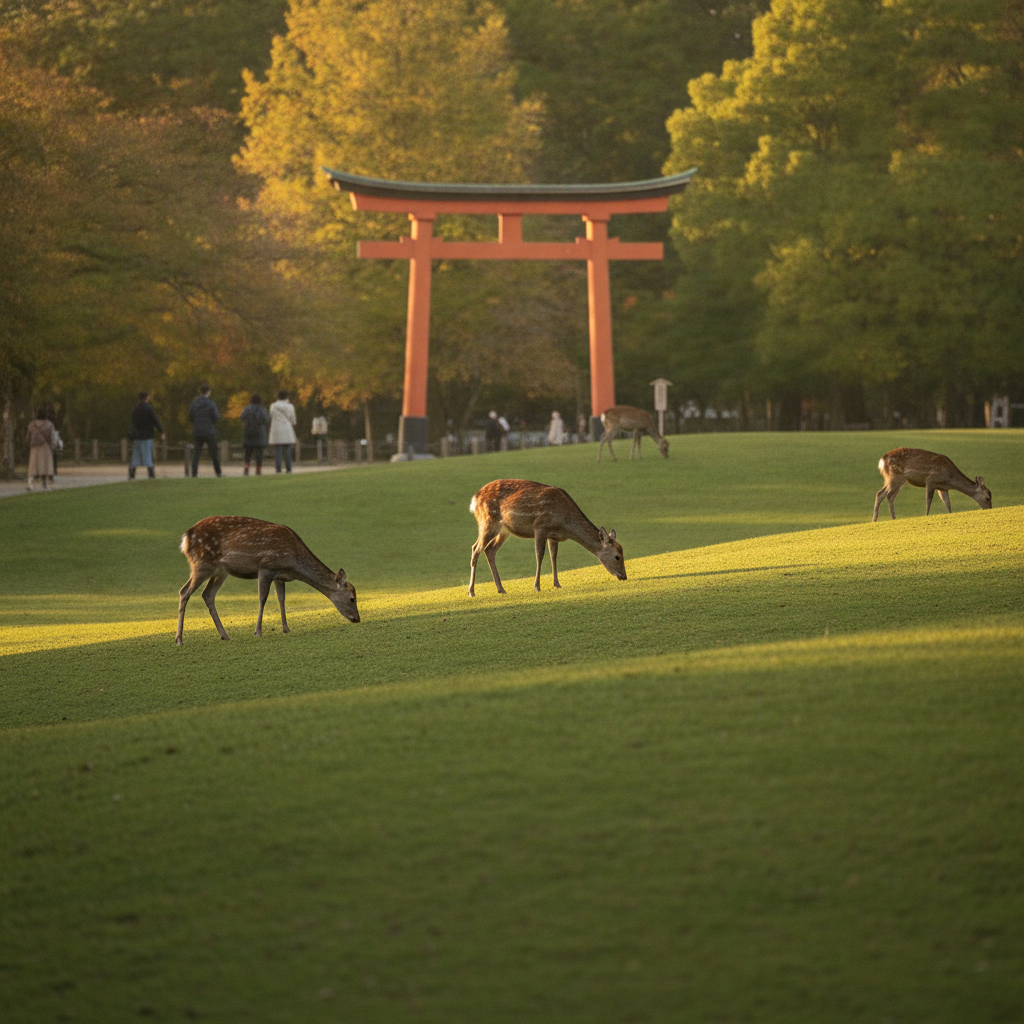
Nara was Japan's capital before Kyoto, and it has the country's largest bronze Buddha, one of its oldest shrines, and around 1,200 free-roaming deer that bow for crackers. It's under an hour from either Kyoto or Osaka, and it's one of the easiest great day trips in the Kansai region. Here's how to do it, starting with the question everyone has.
Are the deer safe?
Yes, with two conditions.
The deer are wild animals that have lived alongside people for over a thousand years and are considered messengers of the gods at Kasuga Taisha. They are used to humans and food, and that is exactly the problem: they associate you with crackers, and they will nudge, nibble your bag, and sometimes head-butt if you tease them or hold food out of reach. The city records around a hundred or so minor injuries most years, mostly bites and butts to people holding crackers.
Rule one: when you buy shika senbei, deer crackers, from the vendors around the park, don't stand there holding them. The deer will swarm. Hand them out quickly, and when you're done, show your empty palms; the deer understand this and move on. Don't put crackers in your pocket; they know.
Rule two: be more careful in autumn, rutting season, when males are more territorial, and in early summer, when mothers with fawns will move away anyone who gets close. Don't touch fawns.
Do that, and the deer are a delight. Bow to one, and it bows back, a genuine dip of the head that the Nara deer, uniquely, have learned. Then it eats your cracker.
Getting there
From Kyoto: a Kintetsu limited express to Kintetsu-Nara, around 35 minutes, or the JR Nara line, a bit longer. Kintetsu-Nara station is a five-minute walk from the park. From Osaka: Kintetsu from Namba, around 40 minutes. Kintetsu is the better choice from either city.
Todai-ji: the Great Buddha Hall
Walk east through the park, deer begin immediately, to Todai-ji. The Great Buddha Hall is one of the largest wooden buildings in the world.
Inside, the 15-metre bronze Vairocana Buddha fills the hall. Walk around it clockwise. The scale registers in odd details: one of the fingers is longer than you are, and the Buddha's hand is raised in a gesture that means "have no fear." Behind the statue, there's a wooden pillar with a hole at the base said to be the same size as the Buddha's nostril; children, and small adults, squeeze through for luck. There is always a queue and always laughter.
In the hall, sound matters: the murmur of a few hundred people, the click of a coin dropped into the offering box, and, if you time it, the low, single stroke of the temple bell.
Kasuga Taisha: the lanterns
A walk southeast through the forest, the deer follow, is Kasuga Taisha, the Fujiwara clan's shrine. Its approach is lined with thousands of stone lanterns furred with moss; the shrine buildings carry more in bronze. Entry to the outer areas is free; the inner paid area includes a darkened hall where lanterns are lit year-round so you can see what the twice-yearly lantern festivals look like. The vermilion buildings against the cedar forest are the most photographed thing in Nara after the deer.
Naramachi: the old merchant quarter
Walk back southwest of the park to Naramachi, the former merchant district of lattice-fronted wooden townhouses. It's low-key: a few small museums, sake breweries, craft shops, and small charms hanging from the eaves said to take on misfortune for the household. Have a late lunch here; kakinoha-zushi, mackerel sushi wrapped in persimmon leaves, is the Nara thing.
Order and timing
Station, park and deer, Todai-ji, Kasuga Taisha, Naramachi, station. Six hours is comfortable; five is doable. Todai-ji in the morning is far quieter than at noon.
The park is big and the paths aren't well signed for the Todai-ji-to-Kasuga forest walk, which is the best part. Our Nara Deer & Great Buddha Day-Trip Pamphlet lays out the route with walking directions between each stop, where the cracker vendors are, and the deer etiquette above in a form you can pull up on your phone. It's $20 and works offline. The bow is free.
Nara Deer & Great Buddha Day-Trip Pamphlet
Nara Park's deer, Todai-ji's Great Buddha, Kasuga Taisha's lantern path and Naramachi, with directions from Kyoto or Osaka.
See the full pamphlet