Hakone Day Trip from Tokyo: A One-Day Itinerary With Art, Black Eggs, and an Onsen
Hakone is the standard answer to "where can I go for a day from Tokyo," and it deserves it: 90 minutes from Shinjuku, a real volcano, hot springs, and a sculpture museum in the mountains. The trouble is that the area is large and the transport is a chain of trains, cable cars, and ropeways that sounds simple on paper. Here's a one-day plan that works without rushing.
Getting there and the Hakone Free Pass
Take the Odakyu Romancecar from Shinjuku to Hakone-Yumoto (about 85 minutes, reserved seats, around ¥2,500 one way). The alternative is the regular Odakyu express with a change at Odawara, which is slower but cheaper.
Buy the Hakone Free Pass before you leave Shinjuku. It covers the local Tozan railway, cable car, ropeway, pirate ship on the lake, and buses for two days, and it pays for itself by mid-afternoon. It also gives small discounts at many attractions.
Leave Shinjuku by 8:00 a.m. Later than 9:00 and the day gets tight.
Stop 1: Hakone Open-Air Museum
From Hakone-Yumoto, the Tozan railway climbs the mountainside with three switchbacks to Chokoku-no-Mori station (about 40 minutes). The museum is a two-minute walk.
It's a sculpture park spread across a hillside with the mountains as the backdrop: large works by Henry Moore, Niki de Saint Phalle, and Japanese artists, a stained-glass tower you can climb, and a Picasso Pavilion with over 300 pieces, mostly ceramics, that is more interesting than the count suggests. There's also a free foot bath fed by hot spring water where you can sit with your shoes off and look at the sculptures. Allow 90 minutes to two hours. Entry is around ¥1,600.
Stop 2: Owakudani and the black eggs
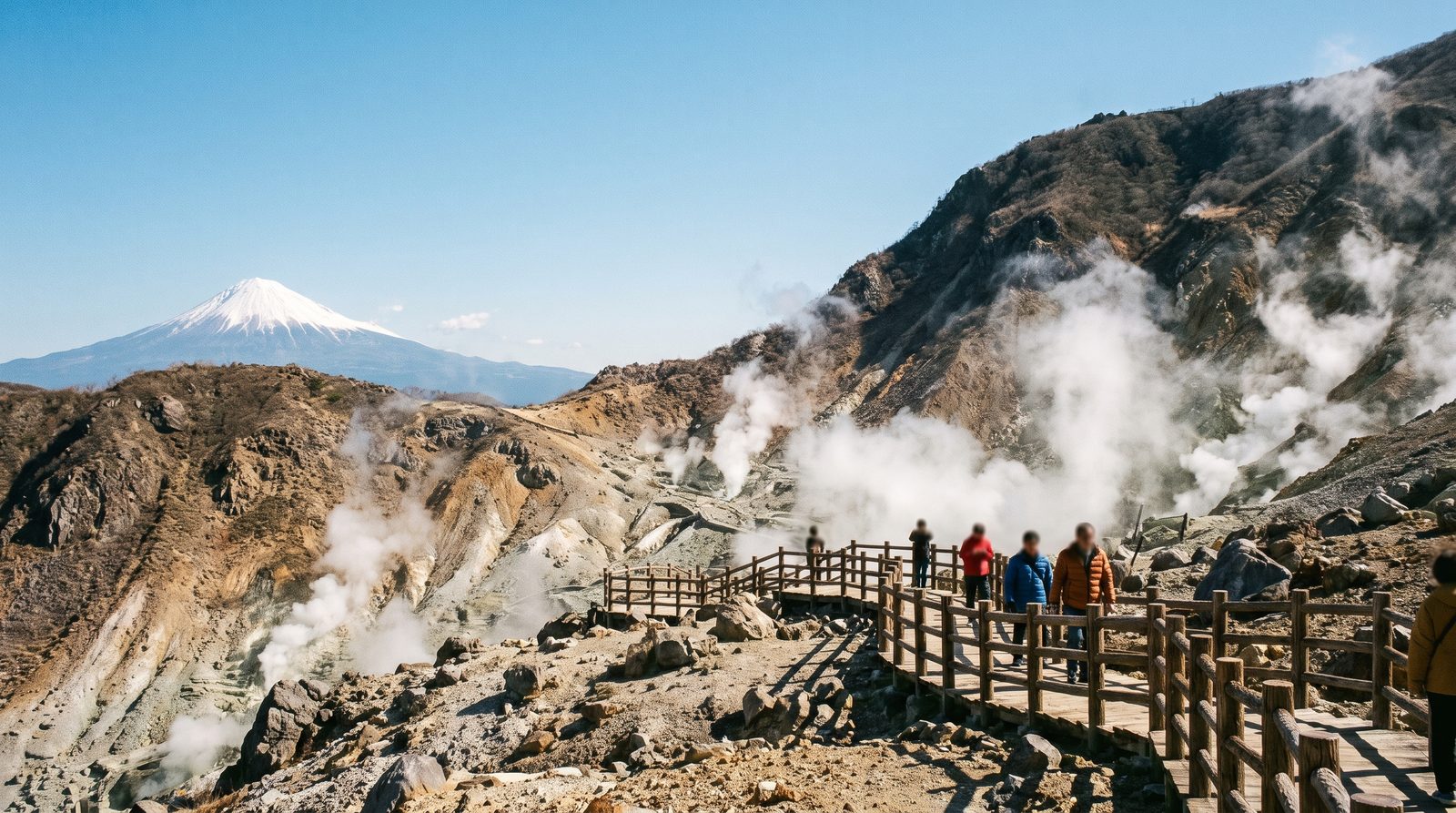
Two more stops on the Tozan railway to Gora, then the cable car up to Sounzan, then the ropeway to Owakudani. The ropeway is the best five minutes of the day: the car crests a ridge and the ground below opens into a bare, steaming valley of yellow-white rock. On a clear day Mount Fuji appears to the northwest.
Owakudani is an active volcanic area, and it smells like it: sulfur, sharp enough that you notice it inside the ropeway car before the doors open. The famous item is kuro-tamago, eggs boiled in the hot spring pools until the shells turn black from the sulfur and iron. Local lore says each one adds seven years to your life. They're sold in bags of four or five near the ropeway station, and they taste like a normal hard-boiled egg with a faint mineral edge. Eat one standing at the rail with the steam rising below you.
Note: parts of Owakudani close during periods of elevated volcanic activity, and the ropeway suspends service in high wind. Check the morning of.
Stop 3: a day-use onsen
Hakone's original reason for existing is hot springs. You don't need to stay overnight; many ryokan and dedicated bathhouses offer day-use bathing (higaeri onsen) for ¥1,000 to ¥2,500, and several cluster around Hakone-Yumoto, which is convenient for the train home.
Etiquette is simple: wash thoroughly at the seated showers before entering the bath, no swimsuits, tie up long hair, and keep your small towel out of the water. Tattoos are still refused at some facilities; private-bath rentals (kashikiri) are the workaround if that affects you.
After a day of switchback trains and volcanic wind, sitting in an outdoor bath while the light goes and the trees around you turn to silhouettes is the point of Hakone. The water is hot enough that fifteen minutes is plenty.
Timing summary
- 8:00 Romancecar from Shinjuku
- 9:30 Hakone-Yumoto, Tozan railway up
- 10:15 to 12:00 Open-Air Museum
- 12:30 to 14:00 Gora, cable car, ropeway, Owakudani (lunch at Gora or Owakudani)
- 14:30 to 16:00 Return toward Yumoto, onsen
- 17:00 Romancecar back to Shinjuku, arriving around 18:30
If you have extra time, the pirate ship across Lake Ashi from Togendai to Hakone-machi adds an hour and is covered by the pass.
Doing this route with the transfers already worked out
Hakone's difficulty is not any single stop. It's the five modes of transport, the platform changes at Gora, and knowing that the ropeway might be closed before you've climbed all the way up to find out.
Hakone Hot Spring & Art Day Trip Pamphlet
The Open-Air Museum, Owakudani's black eggs, and a day-use onsen, with train, cable car, ropeway, and walking directions from wherever you're starting in Tokyo.
See the full pamphlet