Fushimi Inari: How Long to Walk It, and a Kyoto One-Day Itinerary
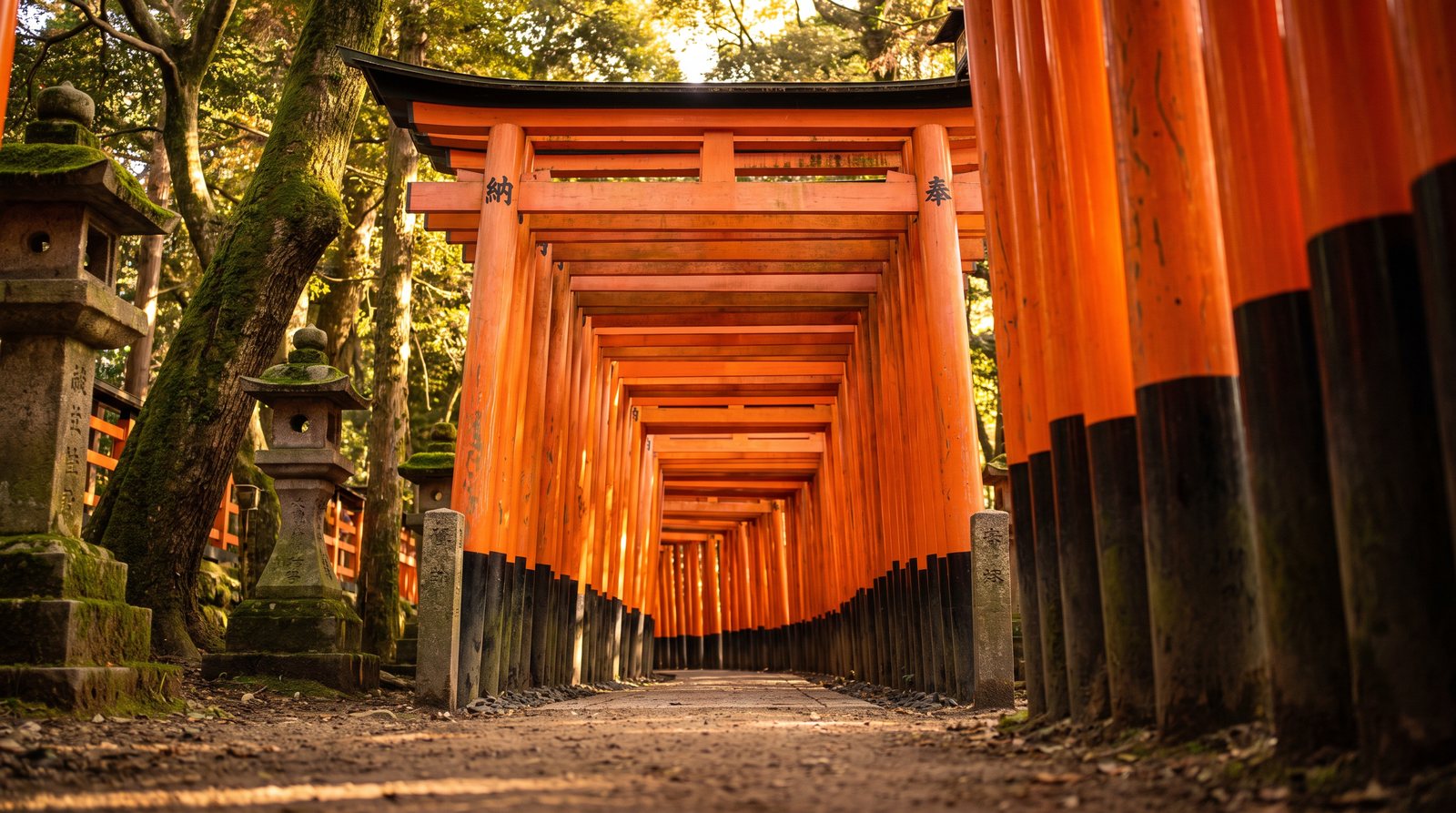
Most people arrive at Fushimi Inari with the same two questions: how long does it take, and do I have to go all the way up? The honest answers are "it depends on your knees" and "no." Here is how the mountain actually breaks down, followed by a one-day plan that pairs it with the parts of Kyoto that don't fit on a postcard.
How long does Fushimi Inari take?
The full loop from the main gate to the summit (Ichinomine, 233 m) and back is roughly 4 km with a lot of stairs. Plan on 2 to 3 hours at a comfortable pace with photo stops. Break it into stages:
- Main gate to Senbon Torii (20 min): The famous double row of vermilion gates begins just past the main hall. This is the crowded section.
- To Yotsutsuji intersection (about 45 min from the gate): A viewpoint over southern Kyoto with a couple of small teahouses. Most visitors turn back here, and honestly it's a fine place to stop.
- Yotsutsuji to summit and back (another 45 to 60 min): Fewer people, more moss, more small altars with fox statues. The summit itself is a cluster of shrines rather than a viewpoint.
If you only want the torii photos, 40 minutes covers it. If you want the mountain, give it the morning.
Timing and crowds
Go early. The shrine is open 24 hours, and at 7:00 a.m. the lower torii are quiet enough that you can hear your own footsteps on the gravel. By 10:00 a.m. the same path is a slow single-file shuffle. Past Yotsutsuji the crowd thins regardless of the hour, and the sound changes: the chatter drops away and what's left is cicadas in summer, or in autumn the dry tick of leaves landing on the roofs of the gates. Wear real shoes. The stone steps get slick after rain.
A one-day Kyoto itinerary after the shrine
Fushimi Inari is a 5-minute train ride from Kyoto Station (JR Nara Line to Inari), so it's easy to be done by late morning and still have a full day. A sequence that works well:
Late morning: a pottery workshop. Kiyomizu-yaki is Kyoto's traditional ceramic style, and several studios in the eastern hills run 60 to 90 minute sessions for visitors. You'll sit at a wheel with an instructor beside you who corrects your hands with the smallest possible gestures, a thumb pressed in, a wrist tilted, and says almost nothing. The finished piece is glazed and fired after you leave and can usually be shipped abroad.
Early afternoon: matcha in a machiya. The traditional wooden townhouses that survive in Kyoto are narrow, deep, and built around a small inner garden. A few century-old machiya now serve tea. Sitting on tatami with a bowl of matcha while a room this old creaks around you is a quieter kind of Kyoto than the temples, and it takes only half an hour.
Late afternoon into evening: Gion. Hanamikoji Street and the lanes along the Shirakawa canal are best after 5:00 p.m., when the shop lanterns come on and the tour groups have mostly left. Don't chase geiko or maiko for photos. If you see one, you'll hear her before you see her: the hollow knock of wooden okobo sandals on stone is unmistakable.
Practical notes
- Food near the shrine: The approach street sells grilled sparrow and quail (a local oddity), inari sushi, and green tea soft-serve. Eat before or after the climb, not halfway up.
- Getting between stops: The pottery studios, machiya teahouses, and Gion are all on the east side of the Kamo River. Buses connect them, but the 206 and 100 routes fill up; a taxi between two of these stops is usually under ¥1,500 and worth it.
- Total cost estimate: Shrine free, pottery ¥3,000 to ¥5,000, matcha ¥1,000 to ¥2,000, dinner in Gion from ¥3,000 upward.
Doing this route without the guesswork
The hardest part of this day isn't any single stop. It's the connections: which studio takes walk-ins, which machiya is actually open on the day you're there, and how to get from the Inari station exit to the right bus without a wrong turn.
Kyoto Traditional Culture Pamphlet
Directions from wherever you're starting to Fushimi Inari, then the pottery workshop, machiya matcha ceremony, and Gion — all with turn-by-turn routing.
See the full pamphlet