What to Eat in Dotonbori: An Osaka Street Food Guide for First-Timers
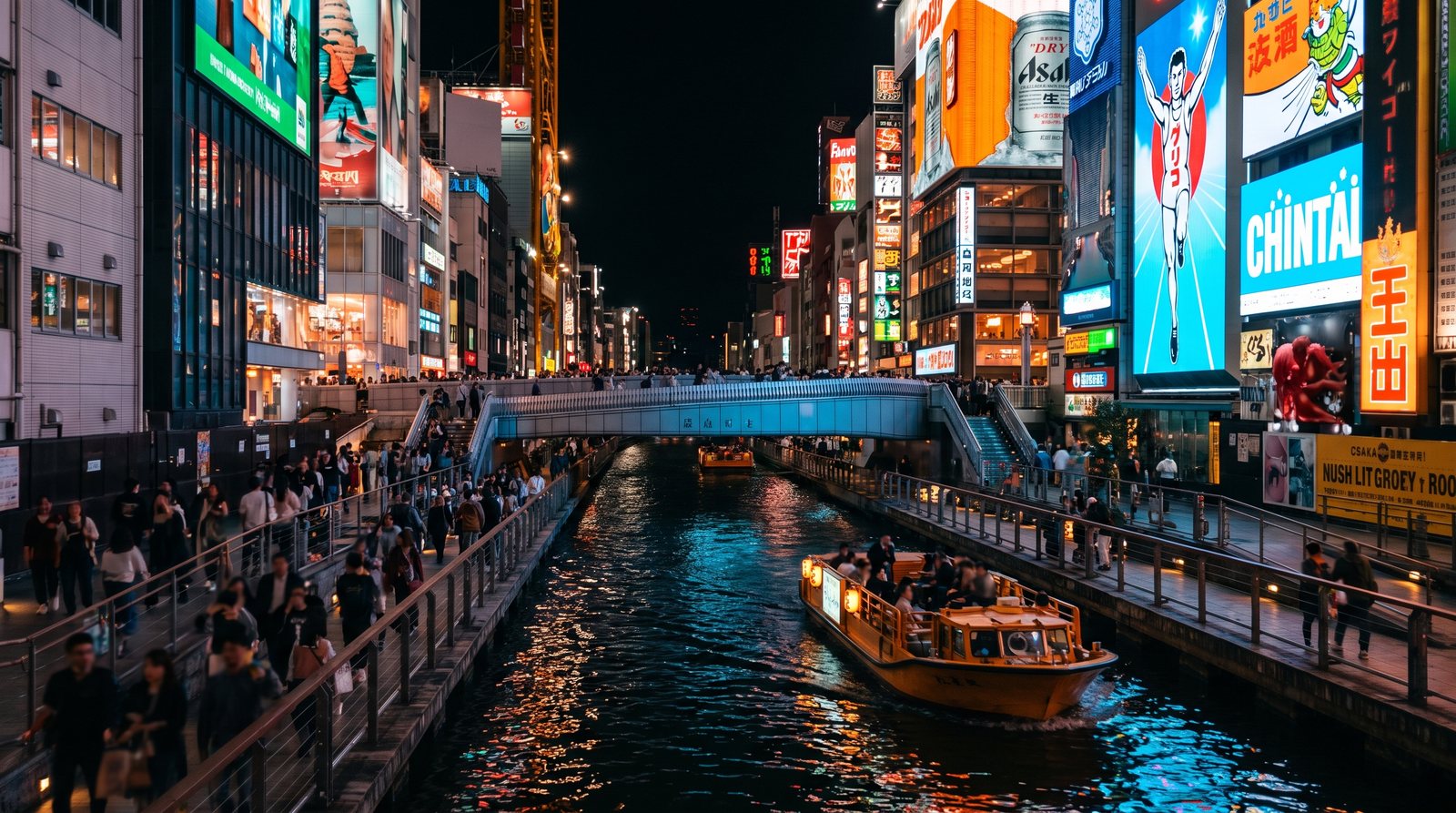
Osaka has a word for its own eating culture: kuidaore, roughly "eat until you drop." Dotonbori, the canal-side strip in the Namba district, is where the city practices it most loudly. Here's what's worth your stomach space, in the order you might actually eat it on a single evening.
Start with takoyaki, and try more than one stand
Takoyaki (batter balls with a piece of octopus inside, cooked in a dimpled iron plate) is the dish Osaka is proudest of, and there are at least a dozen serious stands within a five-minute walk of the Glico sign. They are not all the same. Some fry the batter crisp; some keep it runny inside so it almost spills when you bite. Toppings vary too: standard is brown sauce, mayo, bonito flakes, and green laver, but you'll find salt-and-green-onion versions and ones with a dashi broth on the side.
The right way to do it is a comparison. Buy six from one stand, six from another, and eat them standing at the counter. Watch the cook while you wait: they flip each ball with a single metal pick in a rhythm that never seems to pause, and the hiss when fresh batter hits the plate is the sound of this street. They are extremely hot inside. Wait a minute.
Kushikatsu and the one rule you must not break
Kushikatsu is skewered, breaded, deep-fried anything: pork, shrimp, lotus root, quail egg, cheese, asparagus. You dip each skewer into a communal tin of thin sauce on the counter. The rule, printed on the wall of every shop in Japanese and English, is no double dipping. You dip once, before the first bite. If you want more sauce, use the free cabbage leaves as a scoop.
Most kushikatsu shops are casual, with counters and a menu where individual skewers cost ¥100 to ¥250. Order in small rounds. A satisfying stop is 8 to 10 skewers with a beer.
Other things worth ordering
- Okonomiyaki: The savory cabbage pancake. Good sit-down versions cook it on a hot plate in front of you. Allow 30 to 40 minutes.
- Negiyaki: Okonomiyaki's cousin with green onion in place of most of the cabbage, thinner and lighter.
- Kani (crab): The mechanical crab over Kani Doraku is the landmark, and the restaurant beneath it is fine, but pricey. Skip it unless crab is a priority.
- Cheesecake: The wobbly, souffle-style cheesecake with a branded stamp on top is sold right on the strip and makes a good final bite.
When to go and how to see the lights
Dotonbori is a daytime shopping street and a nighttime spectacle. Arrive around 5:30 p.m. and you get both. The neon and LED billboards along the canal switch on gradually as it gets dark. The Glico running man is the famous one, but the whole facade opposite Ebisu Bridge is worth watching from the bridge itself for a few minutes. The canal water picks up every color and the reflection moves with the tour boats. It's loud, it smells of fried batter and sauce, and it's completely unselfconscious about being exactly what it is.
Ebisu Bridge is the crowd bottleneck. For a quieter angle on the same view, walk one bridge east to Aiau Bridge, or take the riverside walkway on the south bank.
Practical notes
- Cash: Many stands are cash-only. Bring ¥5,000 or so in small bills.
- Lines: A 10-minute line at a takoyaki stand is normal on weekends. Longer than that is usually not worth it; the stand two doors down is probably equally good.
- Nearby: Hozenji Yokocho, a stone-paved alley one block south, has the moss-covered Fudo statue and a handful of quieter restaurants if the strip gets to be too much.
- Vegetarians: Osaka street food leans hard on meat, seafood, and bonito. Kushikatsu shops are the safest bet for pure vegetable skewers, though the batter and oil are shared.
If you'd like the evening mapped out
There is enough on this strip that a first visit can turn into wandering back and forth without settling on anything.
Osaka Food & Dotonbori Night Pamphlet
A single evening route through Dotonbori's best takoyaki, kushikatsu, and okonomiyaki, with walking and train directions from wherever you're starting.
See the full pamphlet