Asakusa Half-Day Itinerary: Kaminarimon, Nakamise & Senso-ji in 3 Hours
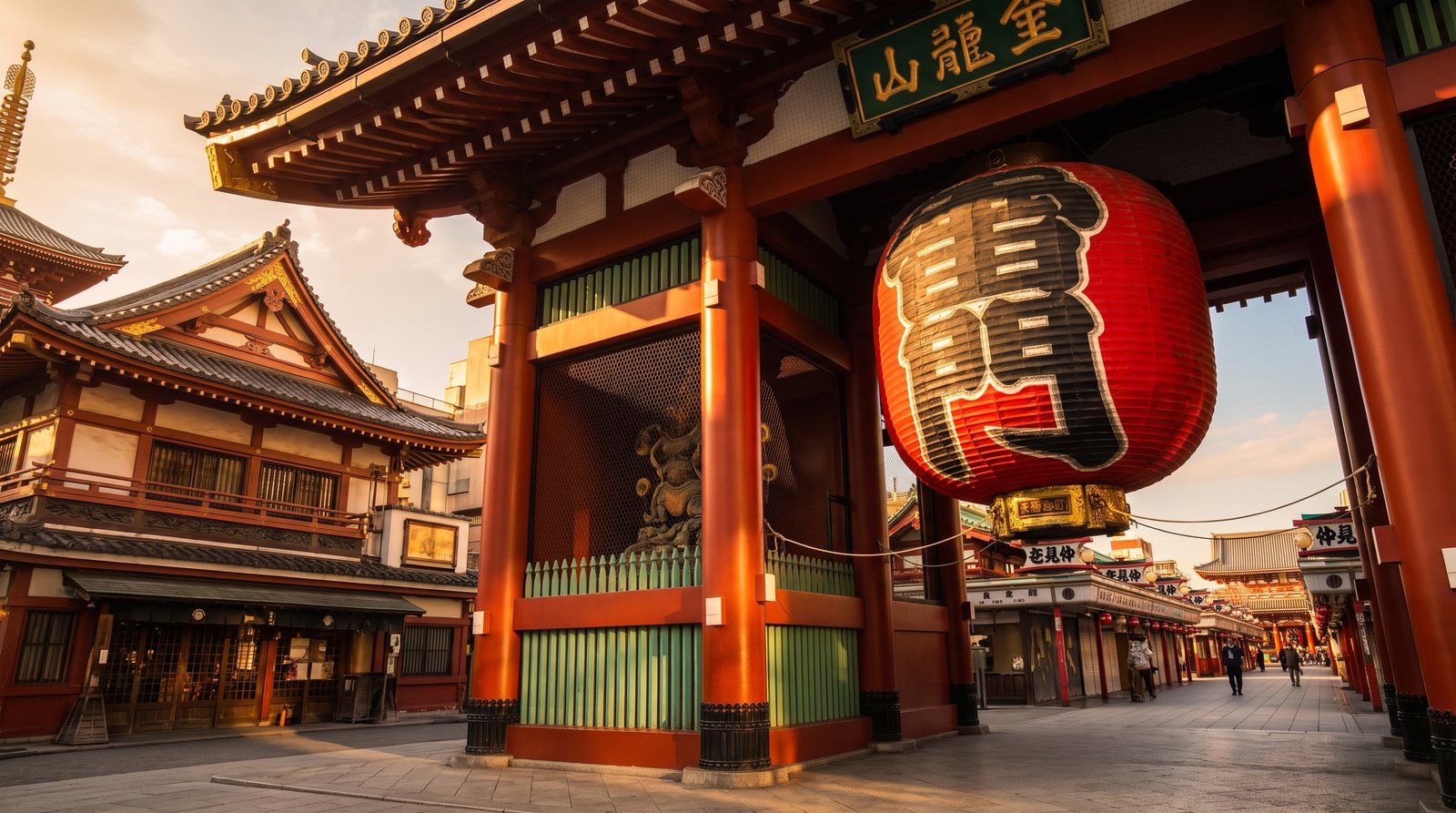
Asakusa is the part of Tokyo most people picture before they arrive: the giant red lantern, the shopping street lined with paper fans and rice crackers, the incense smoke drifting up in front of a temple older than the city itself. It is also small enough to see properly in a morning. This is the route to give friends who have three hours and want to leave feeling like they actually saw it rather than shuffled through it.
Start at Kaminarimon, but come before 9:30
The Thunder Gate (Kaminarimon) is the obvious starting point, and it is worth the cliché. The lantern is nearly four metres tall and weighs about 700 kilograms; look underneath it for the carved wooden dragon most visitors walk straight past. The statues on either side are Fujin (wind) and Raijin (thunder), the gate's namesakes.
Timing matters here more than anywhere else in Tokyo. By late morning the gate is a wall of tour groups. Arrive between 8:00 and 9:30 and you can photograph the lantern with almost no one in frame. The temple grounds themselves are open 24 hours, and the main hall opens at 6:00 (6:30 from October to March), so an early start is entirely possible.
What to eat on Nakamise Street
Nakamise runs about 250 metres from Kaminarimon to the temple's inner gate, with roughly 90 shops. Most open around 9:00 and close by 19:00. Two practical notes: it is take-out only, and eating while walking is frowned on, so buy something, step to the side of the shop, and finish it there.
What is actually worth your yen:
- Ningyo-yaki — small sponge cakes filled with red bean paste, shaped like lanterns, pigeons, and the temple's five-story pagoda. Buy them hot from a shop where you can see the cast-iron moulds in use, not pre-bagged.
- Age-manju — deep-fried bean-paste buns. The plain and sweet-potato versions are the safest; matcha is good if you like it bitter.
- Kibi-dango — tiny millet dumplings dusted in soybean flour, sold in fives. Pair them with the cold amazake (sweet rice drink) in summer or the hot one in winter.
- Fresh senbei — rice crackers brushed with soy sauce and grilled in front of you. The smell alone will find you.
- Melon pan — the huge, crackly-topped sweet bread from the shop near the end of the street. Not traditional, but the queue is there for a reason.
Budget ¥1,500–2,000 per person for a satisfying graze.
Senso-ji main hall and the five-story pagoda
Past the Hozomon gate, stop at the large incense burner and waft the smoke toward you; locally, it is said to bring good health. The main hall was rebuilt after the war, but the temple's history goes back to 628, when two fishermen are said to have pulled a small statue of Kannon from the Sumida River.
Draw an omikuji fortune for ¥100. Senso-ji is known for its unusually high ratio of bad fortunes; if you get one, tie it to the rack and leave it behind, which is the whole point.
The five-story pagoda to the west of the main hall photographs best in the morning light. Walk behind the main hall as well: the small Asakusa Shrine there is a Shinto shrine on Buddhist grounds, which tells you a lot about how religion works in Japan.
Finish on the Sumida River Terrace
From the temple, walk east for about ten minutes toward Azumabashi Bridge. The Sumida River Terrace is a paved riverside path with benches, a clear view of Tokyo Skytree across the water, and far fewer people than the temple. It is a good place to sit with a canned coffee from a vending machine and let your feet recover.
If you have energy left, Hoppy Street (west of the temple) opens its outdoor izakaya seating from around noon, and a plate of stewed beef tendon with a cheap "hoppy" beer-substitute is a very Asakusa way to end a morning.
Walking this route without checking your phone every 30 seconds
The route above is straightforward once you are at Kaminarimon. The part that trips people up is getting there from wherever they are staying, and then finding the specific shops rather than the first one that looks similar.
Asakusa & Kaminarimon Half-Day Pamphlet
Turn-by-turn directions from your current location to Kaminarimon, then the full three-hour route with every stop, what to order, and timing notes — all on your phone.
See the full pamphlet